By Jeremy T. Ballreich
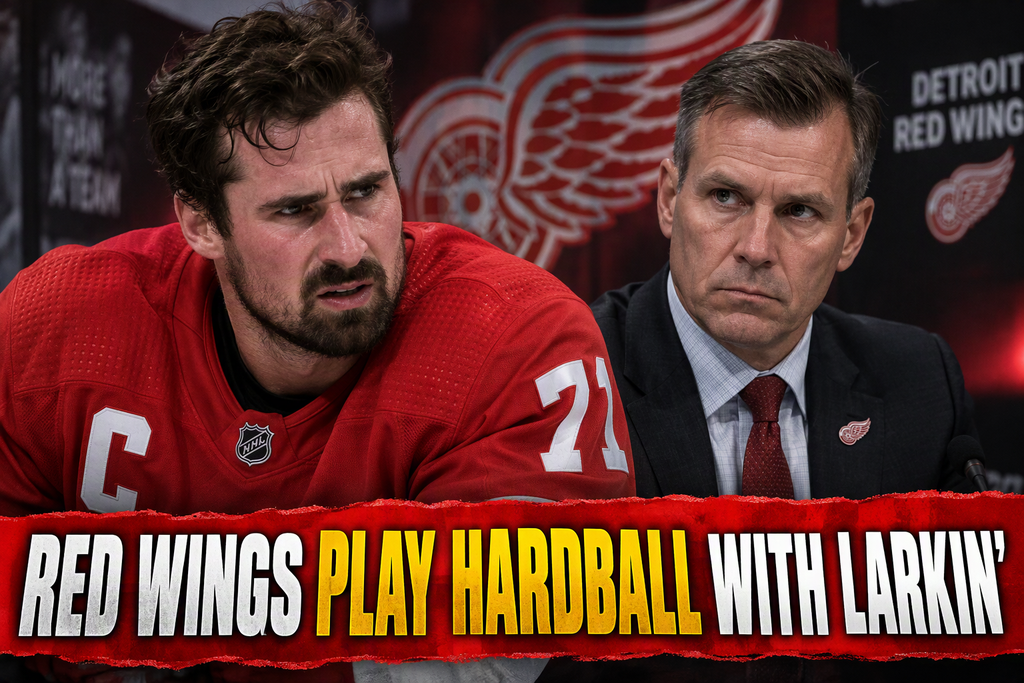
There are moments in professional sports when a franchise reveals exactly who it is. Not through press conferences. Not through carefully crafted statements. Not through social media posts or public relations campaigns. Organizations reveal themselves through actions. And if recent reports surrounding Detroit Red Wings captain Dylan Larkin are accurate, the Red Wings front office may have delivered a message that extends far beyond a potential trade. The message isn’t just for Larkin. It’s for every player in the organization. It’s for every future free agent. And perhaps most importantly, it’s for a fan base that has spent years waiting for a rebuilding plan to finally produce results. The reported trade package from the Minnesota Wild was not insignificant. According to reports circulating around league circles, Detroit was offered a combination that included elite prospect Danila Yurov, three first-round draft selections, and veteran NHL talent. Under normal circumstances, that type of return would command serious consideration for virtually any player not named Connor McDavid or Nathan MacKinnon. Yet Detroit reportedly said no. That decision alone isn’t necessarily controversial. General managers are paid to evaluate long-term value, not public reaction. Steve Yzerman had built his reputation on patience, discipline, and refusing to make moves simply because outside voices demand action. But now that he’s stepped down, that decision falls on Kris Draper. The controversy begins when questions arise regarding why the offer was rejected. Because if this is strictly about hockey value, the conversation remains understandable. If it’s about something else, the optics become much more troubling.
The Business Side of the Decision
From a management perspective, there is an argument to be made.Elite centers are among the hardest assets to acquire in hockey. Teams spend decades searching for players who can anchor a top-six lineup, drive play in all three zones, and provide leadership both on and off the ice.Dylan Larkin checks all those boxes.For nearly a decade, he has been the face of the franchise.He has carried enormous expectations while playing through some of the worst seasons in modern Red Wings history.He’s been the public representative of the organization during a playoff drought that fans never imagined possible from a team that once defined consistency and excellence.You don’t simply move a player like that because another club calls with an attractive offer.A front office must determine whether the assets coming back can realistically replace what is leaving.Draft picks are promises.Prospects are projections.Veteran additions can help, but rarely replace a franchise cornerstone.Perhaps Detroit looked at the package and legitimately believed it was insufficient.Perhaps Yzerman sees more value elsewhere.Perhaps the organization believes Larkin remains an essential part of whatever comes next.Those are all defensible positions.In fact, one could argue that’s exactly how successful front offices should operate.Emotion cannot dictate roster construction.Fans often want action.Executives are paid to seek value.Sometimes the two perspectives do not align.
The Optics Problem
But here’s where the situation changes. The narrative shifts dramatically if the decision isn’t solely based on value. Reports suggesting reluctance to move Larkin to a preferred destination create an entirely different discussion. Now we move beyond hockey. Now we move into relationships. And relationships matter. Whether organizations acknowledge it publicly or not, players keep score. Agents keep score. Veterans around the league keep score. Every move made by a franchise creates a reputation. Players notice who gets treated fairly. Players notice which organizations work collaboratively during difficult situations. Players notice when loyalty appears to be a one-way street. For years, Dylan Larkin has been everything Detroit could have wanted from a captain. He embraced the city. He represented the organization professionally. He accepted responsibility during losing seasons. He stood in front of microphones after devastating losses. He never publicly blamed teammates. He never publicly questioned management. He carried the burden of leadership through years when there were few victories to celebrate. When a player invests that much into an organization, fans naturally wonder whether there should be mutual respect when major decisions arise. But he did request the trade before free agency began, limiting the Red Wings to 4 teams to trade with at the beginning ( Minnesota Wild was one of them).That’s where the frustration begins.
The Fan Perspective: Enough Is Enough
Now let’s take off the journalist hat for a moment. Let’s stop talking about asset management. Let’s stop talking about leverage. Let’s stop talking about future value. Let’s talk like fans. Because many Detroit fans aren’t looking at this situation through the lens of a general manager. They’re looking at it through the lens of loyalty. And from that perspective, the entire situation feels exhausting. What exactly has Dylan Larkin done wrong? Did he quit on the team? No. Did he refuse to play through adversity? No. Did he create drama? No. Did he embarrass the organization? Yes, in a roundabout way, Larkin spent years carrying the expectations of a historic franchise while the roster around him struggled to compete. Night after night, season after season, he showed up. He battled. He answered difficult questions. He became the face of a rebuild that has often felt endless. And now fans are being told that even if an enormous trade package exists, a deal might not happen because of who wants him or where he wants to go? That’s where supporters begin throwing up their hands. Because if a player sacrifices nearly a decade of his career for one organization and eventually reaches a breaking point, shouldn’t there be at least some effort to work with him? Again, nobody is arguing Detroit should simply give him away. Nobody is suggesting the Red Wings accept a bad offer. But if a substantial package is truly on the table, refusing to engage starts looking less like business and more like stubbornness.
What Message Does This Send?
This may be the most important question of all. Professional sports are built on relationships. Talent acquisition isn’t just about money. Culture matters. Reputation matters. Trust matters. Imagine you’re a future free agent evaluating destinations. Imagine you’re a veteran considering where to finish your career. Imagine you’re a young player trying to determine how organizations treat their leaders. What impression does this situation leave? Whether fair or unfair, stories like this shape perceptions. Players want to believe their commitment will be respected. They want to believe sacrifices are recognized. They want to believe loyalty is a two-way agreement. If the perception becomes that the organization values control more than relationships, that can have consequences long after one player departs. Perhaps those concerns are overblown. Perhaps time will prove them wrong. But perceptions become reality in professional sports far more often than teams would like to admit.
The Cost of Waiting
Another concern is whether the organization risks overplaying its hand. History across sports is filled with examples of franchises that waited too long. The desire to maximize value is understandable. The pursuit of perfection is dangerous. Every general manager wants one more asset. One more prospect. One more draft pick. One more concession from the opposing side. But eventually, there comes a moment when the best deal available today is better than the hypothetical deal that may never arrive tomorrow. That is the balancing act every front office faces. It’s what separates difficult decisions from easy ones. And it’s why fans become restless. Because from the outside looking in, the Red Wings appear to be gambling that a better opportunity exists. Maybe they’re right. Maybe another team ultimately offers an even greater package. Maybe patience is rewarded. But if that offer never comes, the questions surrounding this decision will only become louder.
A Franchise Defining Itself
What makes this story so compelling isn’t the trade package itself. It’s what the situation represents. The Red Wings aren’t simply evaluating Dylan Larkin’s future. They’re defining their organizational identity. Every franchise eventually reaches moments like this. Moments when values become visible. Moments when leadership reveals priorities. Moments when difficult decisions expose deeper truths. For Detroit, this appears to be one of those moments. The choice isn’t simply whether to trade the captain. The choice is how that process unfolds. How the player is treated. How the organization communicates. How the franchise balances business realities with human realities. Those details matter. Often more than teams realize.
Final Thoughts
As a writer, I understand Detroit’s position. Front offices must protect organizational interests. They must maximize value. They cannot allow emotion to override strategy. If Steve Yzerman genuinely believes better opportunities exist, he has every right to pursue them. But as a fan, it’s impossible to ignore the growing frustration. Dylan Larkin gave this organization everything. He represented the city with class. He carried the weight of leadership through the darkest years of the rebuild. He became the captain fans were proud to support. If reports are accurate and a massive trade package is sitting on the table, Detroit’s hesitation invites legitimate questions. Questions about priorities. Questions about relationships. Questions about whether loyalty is truly valued within the organization. Because in the end, this isn’t just about a trade. It’s about a message. And right now, the message many Red Wings fans believe they’re hearing is one they never expected from the franchise they love. The Red Wings front office may think it’s protecting organizational leverage. But to an increasingly frustrated fan base, it looks like they’re sending Dylan Larkin a message. The question is whether that message is worth the cost.